Gluteal Augmentation (or Brazilian Butt Lift): Everything You Need to Know
What is gluteal augmentation with autologous fat transfer (also known as BBL)? A Brazilian Butt Lift, commonly referred to as...
Read article →

Gluteal augmentation is a cosmetic surgery procedure that uses a patient’s own fat to add volume to the buttock area. The process involves taking fat from other areas of the body and then, using ultrasound guidance for greater accuracy, placing it into the buttocks.
This approach has two stages:
Before deciding on cosmetic surgery, it’s essential to have realistic expectations about your outcome. Talk to Dr Attalla about what to expect from the surgery and make sure you understand the recovery time, all potential risks and complications, and anticipated results.
At Chelsea Cosmetics, Dr Attalla typically uses ultrasound technology during the procedure. This helps guide where the fat is placed, and offers the following benefits:
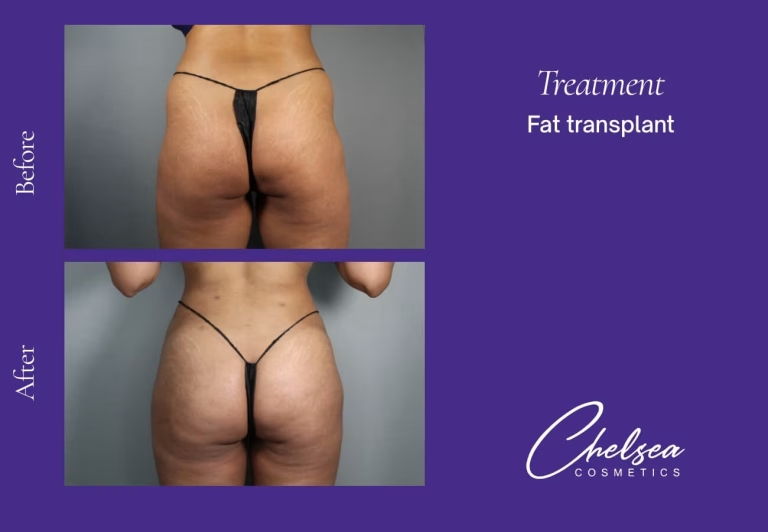
Browse our before & after images of procedures performed by Dr Mark Attalla in Melbourne, Australia
The outcomes shown are only relevant for this patient and do not necessarily reflect the results other patients may experience, as results may vary due to many factors, including the individual's genetics, diet and exercise.


Gluteal augmentation may be considered for patients in good overall mental and physical health who have realistic expectations about the procedure. Candidates need sufficient fat available for transfer. If fat transfer is not suitable, Dr Attalla may discuss other options.
Patients mustn’t have medical conditions that could increase the risks of surgery or affect recovery. Having sufficient skin elasticity in the buttock area may also be an essential factor.
The first step in determining whether ultrasound-guided fat transfer gluteal augmentation surgery is appropriate for you is an initial consultation with Dr Mark Attalla.
Please be advised that you will need a GP referral before booking your appointment.
During your appointment, you’ll cover:
Dr Attalla may also take photos and measurements to serve as reference points when developing a treatment plan.
NB: Before deciding on cosmetic surgery, it is essential to have realistic expectations. If there is anything you are unsure of, we welcome you to ask any questions so you can proceed with your surgery fully informed.
Request Consultation



Dr Mark Attalla, MBBCHa FACCS – Cosmetic Practitioner
MED0001170831
After your personalised plan is created, you will be given clear instructions on how to prepare for surgery. Some medications, such as blood thinners, aspirin, ibuprofen and certain anti-inflammatory drugs, may need to be stopped at least ten days before and after surgery. If you take prescription or over-the-counter medication, it is essential to consult your prescribing doctor before making any changes.
Before the procedure, patients are encouraged to prepare by having healthy food and drinks at home and by collecting any medication prescribed for use after surgery. You will also receive detailed instructions on activities to perform on the night before attending the clinic.
Checking into the hospital
We ask patients to arrive about 15 minutes before their scheduled time. Because anaesthesia is involved, it is necessary to bring a licensed driver to take you home afterwards. Using rideshare or public transport after anaesthesia is not considered safe, so without a driver, the procedure may need to be rescheduled.
On arrival, staff will guide you through the check-in process and take you to the preparation area. Here, your vital signs are checked, and you are provided with a gown. The anaesthesia team will also meet with you to discuss the process and answer any questions. Before surgery begins, there will be an opportunity to ask any final questions you may have.
Anaesthesia
Anaesthesia is provided to keep patients comfortable during the procedure. The type of anaesthesia used will depend on individual circumstances and will be discussed during consultation.
Incisions
Small incisions are made in the areas where fat is collected.
Fat Collection and Preparation
Fat is liposuctioned from selected areas of the body. It is then prepared for transfer.
Before the fat transfer, ultrasound imaging is used to review the gluteal region. This helps identify suitable areas for placement and avoids areas where fat should not be added. The goal is to support safe planning based on the individual’s structures.
During the transfer, an ultrasound device is used to view the cannula in real-time. This helps ensure that the prepared fat is placed in the upper layer of tissue, just below the skin, and avoids deeper areas such as the muscle.
Since the body tends to reabsorb about 25% of the transferred fat, Dr Attalla may inject more fat than is required. The duration of the procedure varies depending on individual needs.
Directly following surgery, the patient remains in the recovery area for observation. Our team monitors the patient’s vitals until they awaken. Once awake, the patient receives information related to the recovery process, a prescription for pain medication, possibly an antibiotic, and instructions on how to wear a compression garment. The patient must refrain from putting pressure on their backside.
After the procedure, patients are advised to avoid sitting directly on the buttock area and to refrain from heavy lifting for the first couple of weeks. This helps reduce pressure on the treated area during the early stages of recovery.
Common effects include swelling, tenderness and bruising, which gradually decrease over several weeks. Some fluid leakage from the incision sites may also occur in the first few days. Bruising and swelling may resolve within two weeks, while residual inflammation can take longer to settle. Sleeping on the stomach or sides is usually recommended, and in some cases, a special cushion may be suggested to support modified sitting positions.
The time it takes to return to routine activities varies from patient to patient. Light daily tasks may be resumed earlier, while strenuous activity and heavy lifting should be avoided for a more extended period, as advised.
COMMON QUESTIONS
As with most operations, it takes some time to achieve the final results from surgery. Typically, you will need to wait at least three months, and optimally up to six months, to fully appreciate your newly augmented buttocks.
The results of your fat transfer will be visible after the procedure, but swelling and healing can affect how the area looks in the early stages. The final results may take a few months to become more noticeable.
Yes, after your surgery, our team will arrange follow-up appointments to monitor healing and provide after-care support. The number of appointments needed varies depending on individual recovery.
The cost of this procedure depends on several factors, such as individual health, the specific requirements of the procedure and the amount of fat transfer planned. Pricing details will be provided during your initial consultation.
You should aim to take as much pressure off your bottom at all times. Avoid sitting on your bottom for the first two weeks. When sleeping, avoid lying on your back. If possible, try to sleep on your stomach or on your side.
You should be able to get up and slowly walk around the day after your surgery.
The effects of your surgery are semi-permanent. However, to maintain the effects, you must keep a consistent weight after surgery. With careful management, your BBL could last a good 10 years, but as your body changes over time, this can affect the results.
You must have a family member or friend drive you home and take care of you for at least the first 24 hours after your Brazilian butt lift procedure.
Like all surgical procedures, a gluteal augmentation procedure carries risks, including infection, bleeding, and nerve damage. Other complications associated with this procedure include the following:
It’s also important to note that not all the transferred fat survives. During the healing process, the body may reabsorb a portion of the transferred fat, which can affect the outcome. This variability means that sometimes multiple sessions may be needed.
FURTHER READING
What is gluteal augmentation with autologous fat transfer (also known as BBL)? A Brazilian Butt Lift, commonly referred to as...
Read article →